
Our take


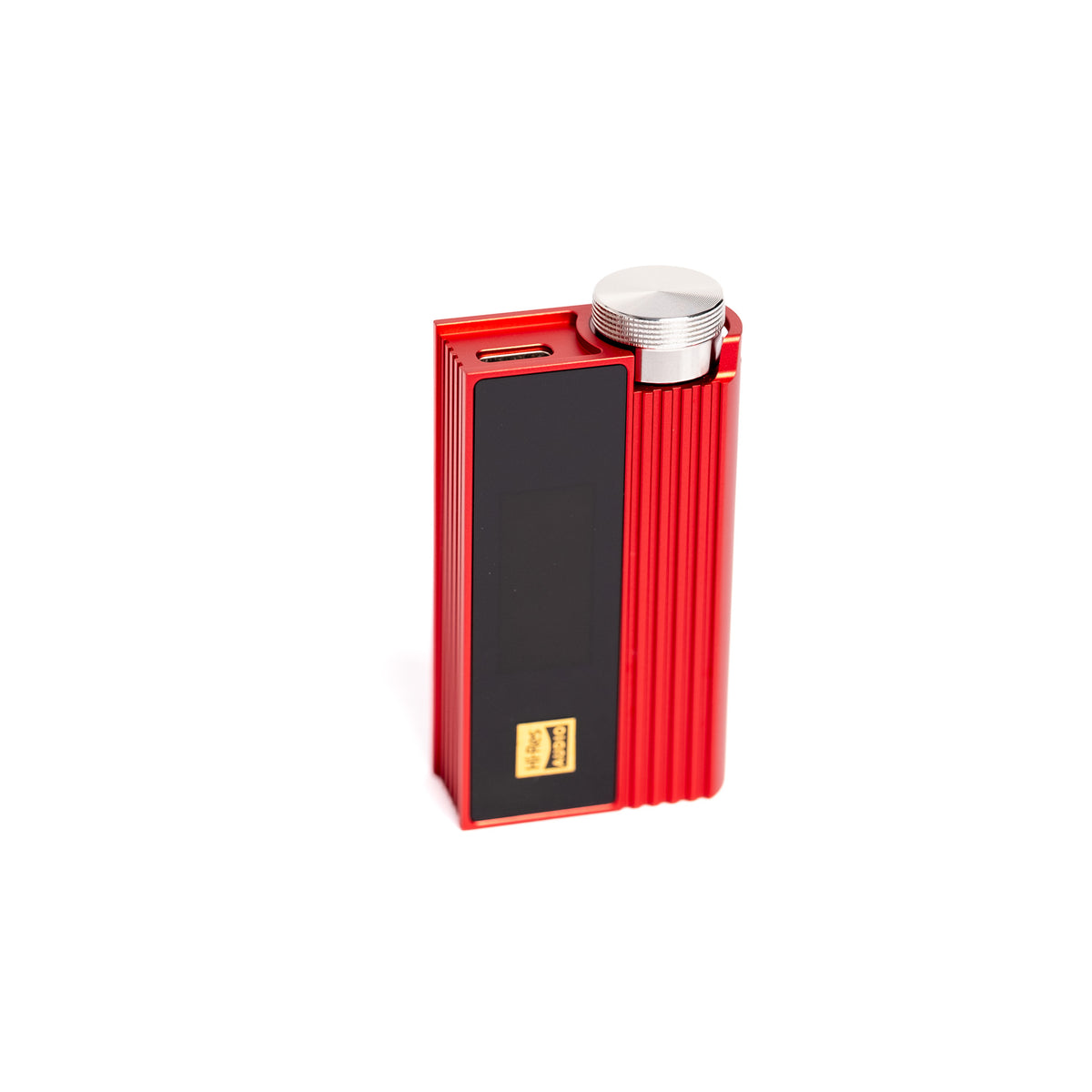
The iBasso DC-Tonfa plugs into your phone or laptop and replaces the usual DAC chip with an R2R ladder, a converter built from 312 precision resistors, which gives music a natural, slightly warm body without blurring the detail. With 800 mW from the balanced output it has more power than most portable players, and the background stays silent even with sensitive earphones. The one catch is the iPhone: there's no companion app on iOS, so you change gain and filters with the knob on the device itself.


What it'll drive :
Every earphone in the shop, with plenty in reserve, and many full-size headphones too. The low-noise power supply keeps the background quiet, so sensitive multi-driver sets don't hiss. Start on low gain with IEMs; high gain is there for headphones.

Streaming & compatibility


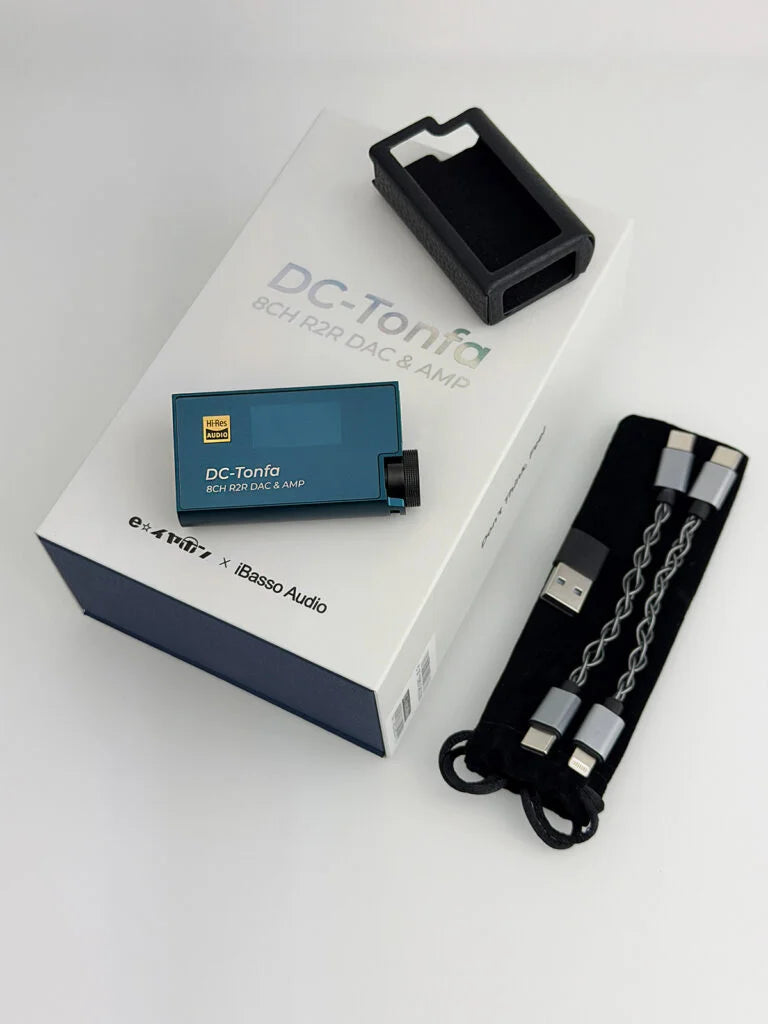
Your phone or computer does the streaming, so every app works: Tidal, Qobuz, Apple Music, Spotify, YouTube Music. It runs without drivers on Android, iPhone (USB-C, or Lightning with the cable in the box), Windows, macOS and Linux.

A UAC 1.0 mode makes it work with game consoles such as the PS5 and Nintendo Switch 2, and the 3.5 mm jack can also send a coaxial digital signal to a bigger DAC. On Android there's an iBasso app for filters, gain and channel balance, and on a computer a control panel in the browser; on an iPhone you use the knob.

Power & Battery


No battery: it runs off your phone or laptop over USB-C. The balanced 4.4 mm output gives 800 mW per channel at 32 Ω and the 3.5 mm gives 219 mW, with a low and a high gain setting.

For a dongle with this much power it draws little current, under 100 mA in NOS mode (the filter-free setting), but like any dongle it will shorten your phone's battery life a little.

Specs

  • Type: USB DAC & headphone amp (dongle)
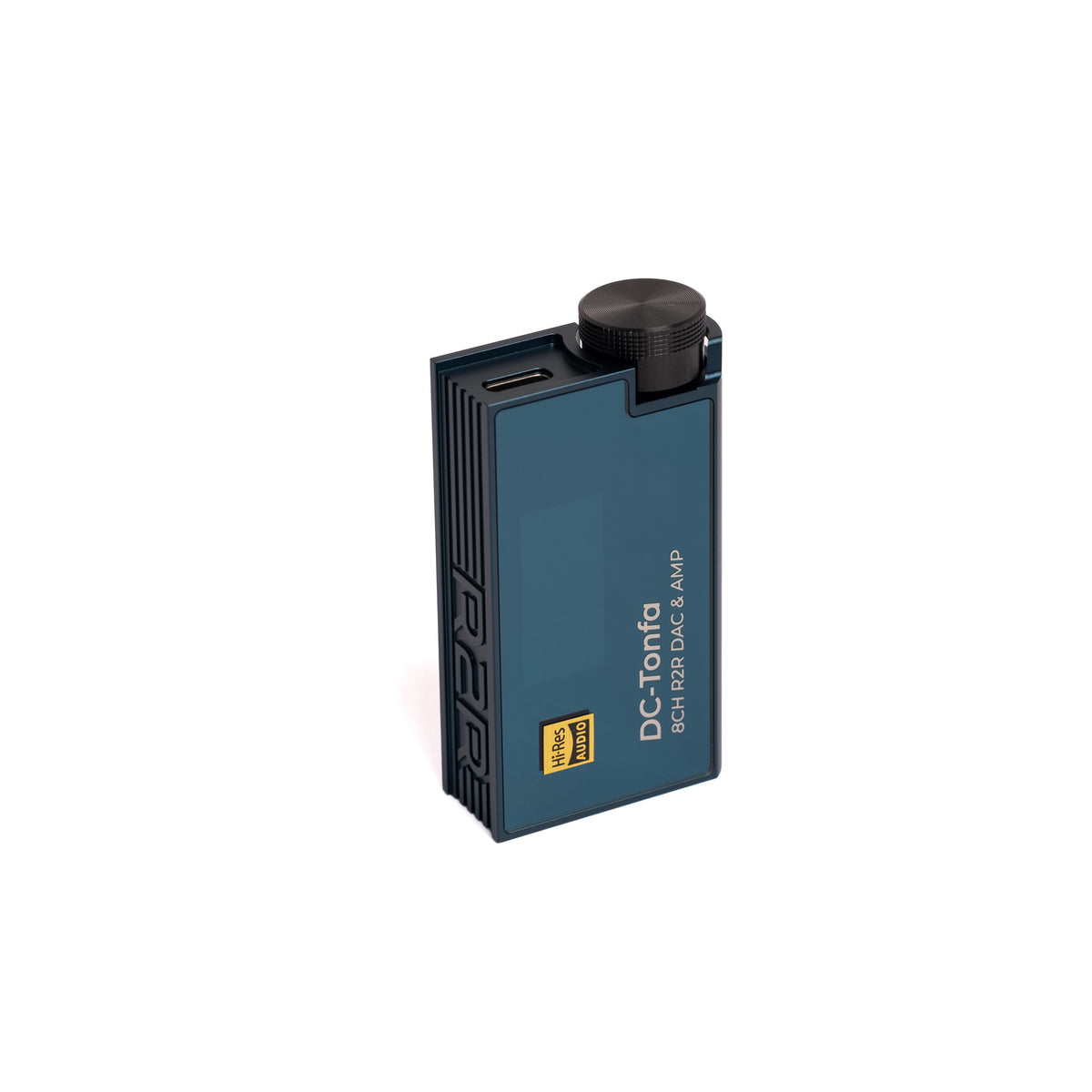
  • DAC: discrete 24-bit, 8-channel fully balanced R2R ladder (312 metal film resistors), iBasso FPGA
  • Filters: NOS mode + 4 digital filters
  • Amp: 2× TI dual op-amps + 4× BUF634A buffers
  • Outputs: 3.5 mm single-ended (doubles as coaxial S/PDIF out) + 4.4 mm balanced
  • Output power: 219 mW (3.5 mm) / 800 mW (4.4 mm balanced) per channel at 32 Ω
  • Output voltage: 2.6 Vrms (3.5 mm) / 5.2 Vrms (4.4 mm), high gain
  • Output impedance: 0.2 Ω (3.5 mm) / 0.5 Ω (4.4 mm)
  • SNR: 118 dB (3.5 mm) / 122 dB (4.4 mm)
  • Formats: PCM up to 32-bit/768 kHz, native DSD512
  • USB modes: UAC 2.0 (phones, computers) and UAC 1.0 (game consoles)
  • Display: 0.96" OLED with multi-function knob
  • Power draw: under 100 mA at 5 V (NOS mode)
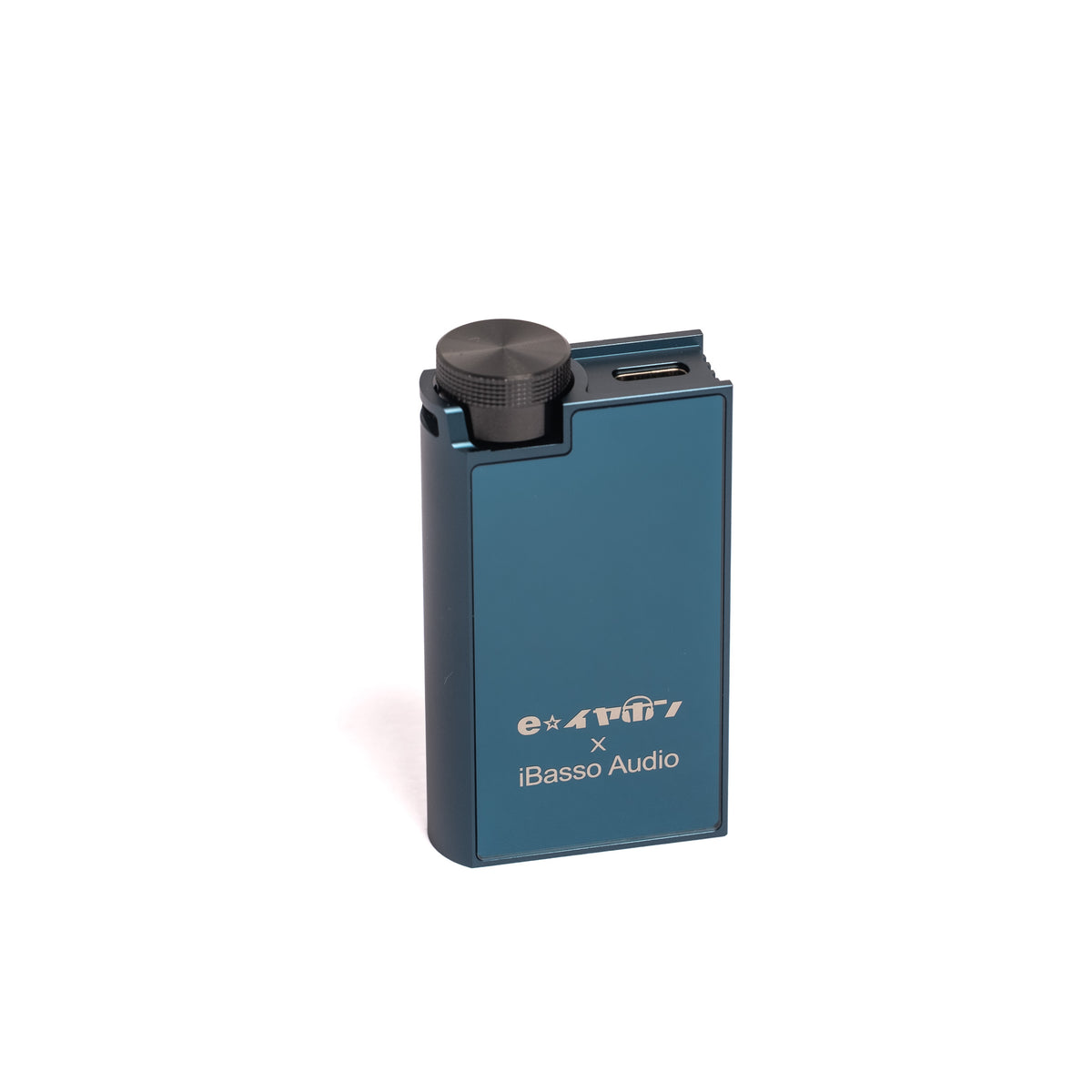
  • Colour: Blue
  • Dimensions: 61 × 34.6 × 15 mm
  • Weight: 45 g
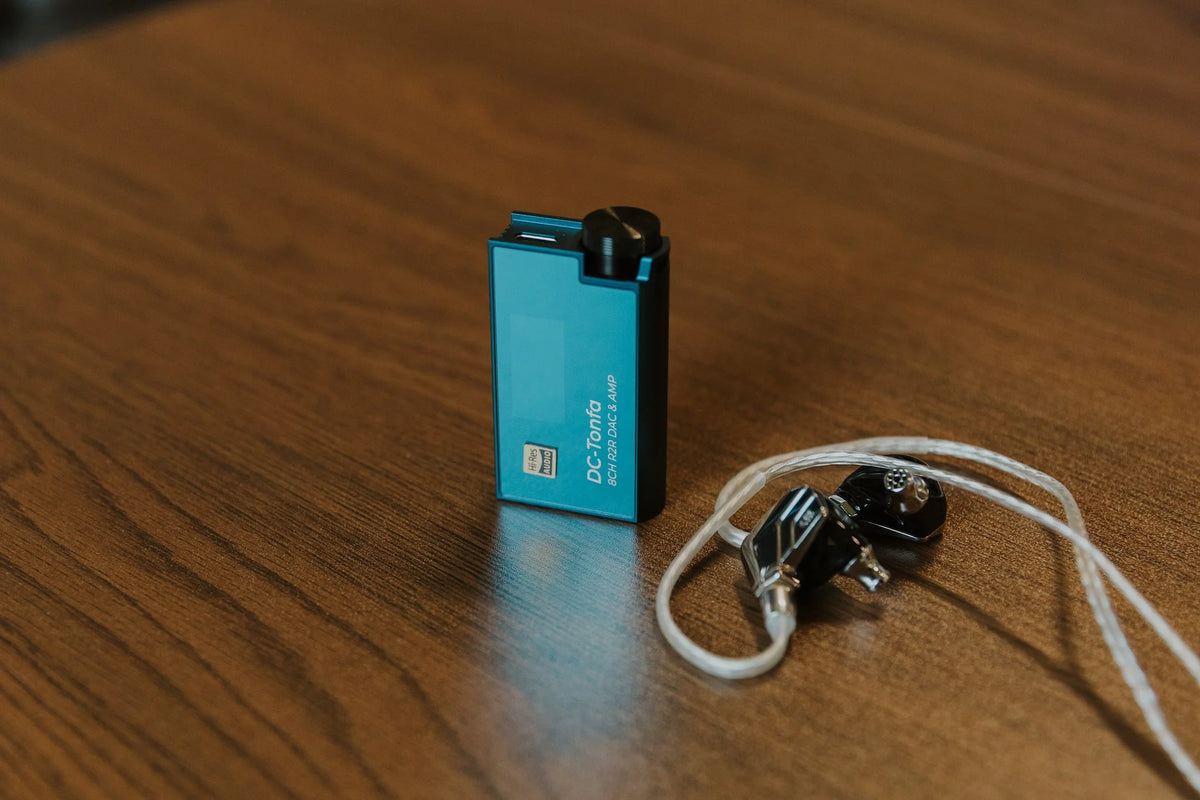
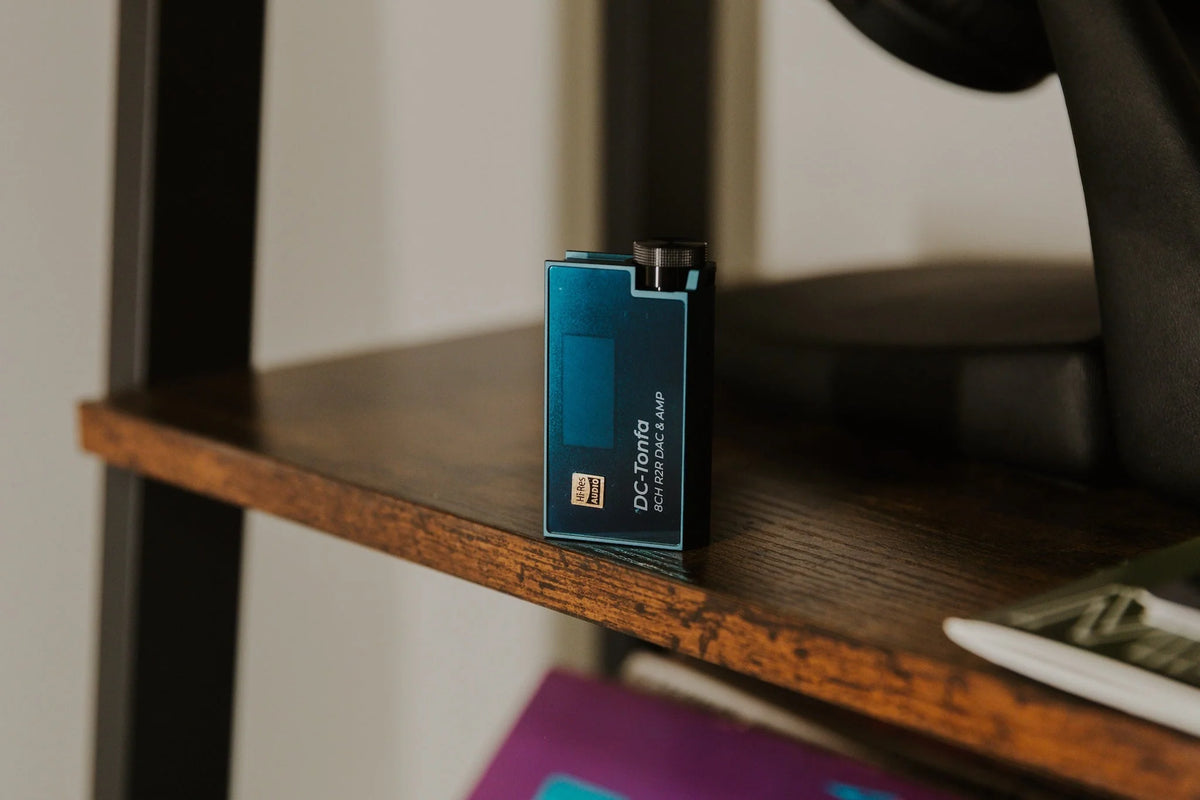
iBasso DC-Tonfa standing on a wooden desk next to a pair of IEMs with a silver cable

What others ask

Can the iBasso DC-Tonfa drive hard-to-drive IEMs and full-size headphones?

Yes, and that's unusual for something this small. The iBasso DC-Tonfa puts out 800 mW per channel from the balanced 4.4 mm output and 219 mW from the 3.5 mm, more than most portable players, so every earphone I sell plays with plenty in reserve and many full-size headphones are on the table too. Keep it on low gain for IEMs and save high gain for headphones.

Does the iBasso DC-Tonfa hiss with sensitive multi-driver IEMs?

No. The iBasso DC-Tonfa feeds its circuit through an ultra-low-noise power regulator, and reviewers who tried it with very sensitive multi-driver flagships heard a black background from both a phone and a laptop. Start on low gain with sensitive sets, which also leaves you more of the volume range to work with.

What does R2R sound like on the iBasso DC-Tonfa compared with a normal dongle?

Most dongles use a single DAC chip, while the iBasso DC-Tonfa converts your music with a ladder of 312 precision resistors, an approach called R2R that you usually find in desktop gear. It gives voices and instruments a natural, slightly warm body without smearing the detail, so it sounds less clinical than many chip-based dongles. NOS mode, which skips the digital filtering, softens the top end for long sessions, and the fastest of its four filters sharpens drum hits when you want more bite.

Does the iBasso DC-Tonfa work with an iPhone, Android, a laptop and a PS5 or Switch?

Yes. The iBasso DC-Tonfa works without drivers on Android, iPhone (USB-C, or Lightning with the cable in the box), Windows, macOS and Linux, and a UAC 1.0 mode makes it work with game consoles like the PS5 and Nintendo Switch 2. One catch on iPhone: iBasso's settings app is Android-only, so on iOS you change gain, filters and NOS mode with the knob on the device, while on a computer there's a control panel in the browser.

Does the iBasso DC-Tonfa drain my phone's battery?

A little, like every dongle, because it has no battery of its own and runs on your phone's power. For something with this much output it's frugal, drawing under 100 mA in NOS mode with standard-resolution files, so a commute won't flatten your phone. If you listen for hours at a desk, plug it into a laptop and the battery stops being a question.

iBasso DC-Tonfa or a tube dongle: which suits me?

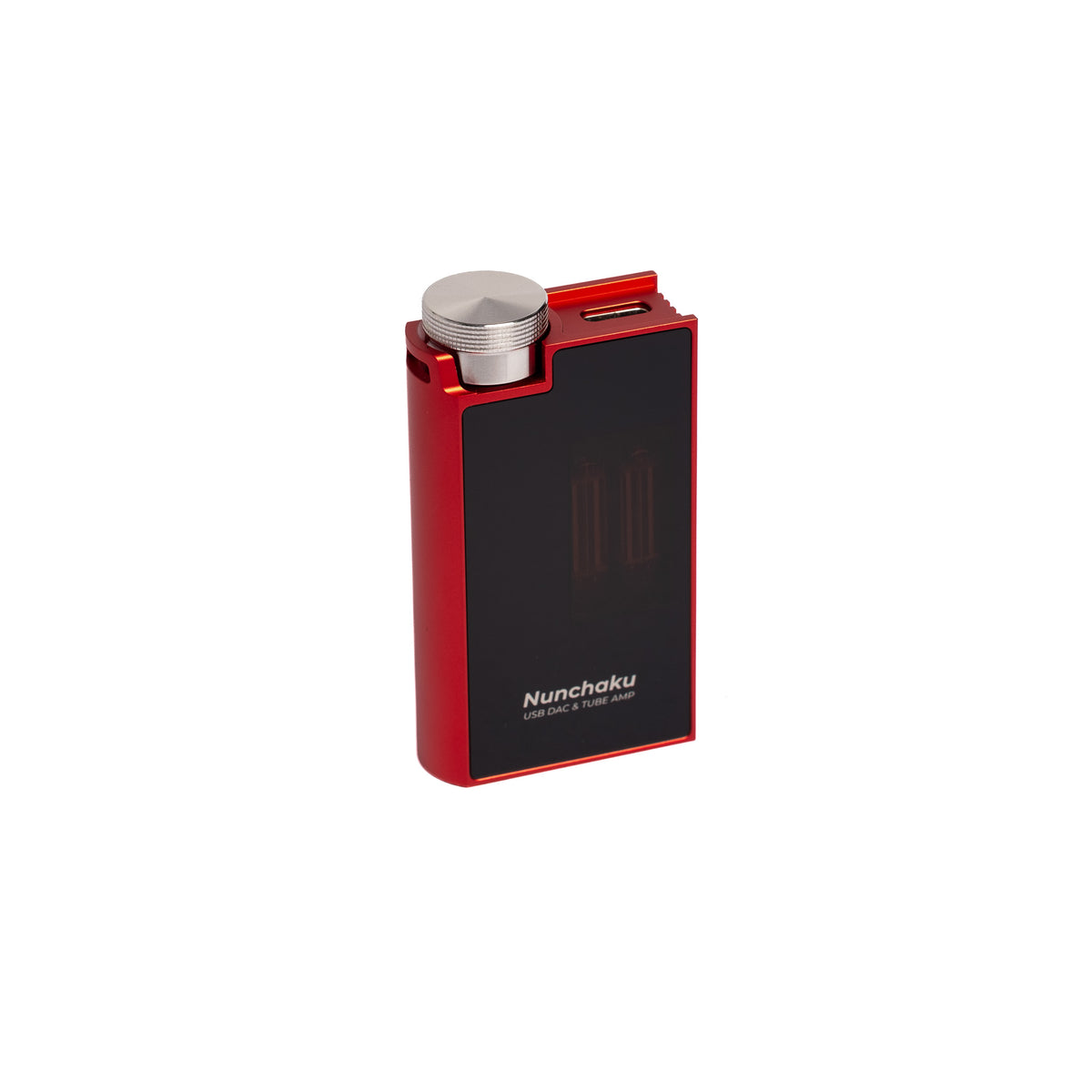
It comes down to how much flavour you want. A tube dongle adds a warm, rounded glow and a bigger, hazier sense of space, while the iBasso DC-Tonfa keeps its R2R warmth subtle, places instruments more precisely and gives you more power. If you want one dongle that sounds natural across your whole library and still drives full-size headphones, the Tonfa is the safer all-rounder.