

How to get a perfect seal from your ear tips
Why this matters more than you think
Your in-ear monitors sit inside your ear canal. The ear tip is the only thing sealing them in place. Get that seal right and the earphone sounds the way it was built to sound. Get it wrong and you lose half of it.
Bass is the first thing to go. A leaky seal lets air escape, and the low end drains out with it. Think of a window left open on a cold day. The heat leaks out no matter how hard the radiator works.
The tip also decides comfort. Too big and your ears ache after twenty minutes. Too small and the IEM works loose every time you move.
Same IEM, different tip, completely different result. So it's worth ten minutes to get this right.
Step 1 — Find your size
Sort this out before you think about sound.
- Start with medium. Most ears land here. It's the safest first guess.
- Put them in and play a bass-heavy track. Something you know well.
- Listen for the low end. Full and present means a good seal. Thin and airy means air is leaking. Size up.
- Check the comfort. Pressure or soreness after a few minutes? Size down.
- Move around. Talk, chew, turn your head. If the sound thins out or the tip shifts, the fit isn't locked in.
- Try one size up and one down anyway. Even if medium feels fine. You're comparing, not guessing.
Don't assume both ears are the same. Plenty of people need a medium on one side and a large on the other. That's normal. Mix sizes if you need to.
Step 2 — The quick seal test
Push the IEM in gently and let it settle. The outside world should go quiet, like the moment a car door closes. If you still hear the room clearly, the seal is leaking.
Good seal
- Bass feels full and solid
- Outside noise drops away
- The music feels centered in your head
Bad seal
- Bass sounds thin or weak
- You hear the room over your music
- Treble feels sharp or harsh
The hum test
Here's a quick second check. With the IEM in, hum a steady note.
A good seal traps the sound inside your ear. The hum turns loud, full, and parked dead-center in your head. A leak lets that sound escape, so the hum goes thin and feels like it's coming from outside you.
It's the same effect as plugging your ears with your fingers and humming. Loud and boomy means sealed. Thin and distant means air is getting out — size up or refit the tip.
Step 3 — Roll for sound
Once the size is right, the shape of the tip changes what you hear. Swapping tips to chase a better sound is called "tip rolling."
The bore is the hole running through the tip. How wide it is shifts the balance.
- Wider bore opens things up. More air, more space, a brighter top end, and sometimes a little less bass.
- Narrower bore pulls things in. Fuller bass, smoother treble, a closer feel.
There's no right answer here, it depends on your ears and the set. A warm earphone can wake up with a wider tip, a bright one can settle down with a narrower one.
— Valentin
Which tip to reach for
If the default tips the IEM comes with are not good enough, we offer a variety of tips we love. Here's when to use each.
Dunu S&S — your default Balanced, true to how the earphone was tuned. Reliable seal, no surprises. Start here. If you're happy, you're done.
Dunu Candy — open it up Wider bore. More air, a bigger sense of space, more sparkle up top. Reach for these if a set feels closed-in, or you want the sound to breathe.
Divinus Velvet (wide bore) — calm it down Soft, wide tip that takes the edge off bright treble while keeping the detail. The comfortable pick for long sessions. Reach for these if a set sounds sharp, or your ears tire after an hour.
Divinus Velvet (normal bore) — warm and cozy Soft, slightly warm, with full bass and a close, intimate feel. It rounds off sharp edges without dulling the detail. Reach for these if a set sounds thin or harsh, or you just want comfort for a long evening.
Divinus Prism — open, and kind to your ears A wide-bore tip in soft medical-grade silicone. It widens the sense of space and adds sparkle up top, like Candy, but the material is gentler on the skin. Reach for these if you want a bigger, airier sound and your ears are prone to itching or pressure.
Featured collection


AZLA SednaEarfit ORIGIN IEM Ear Tips


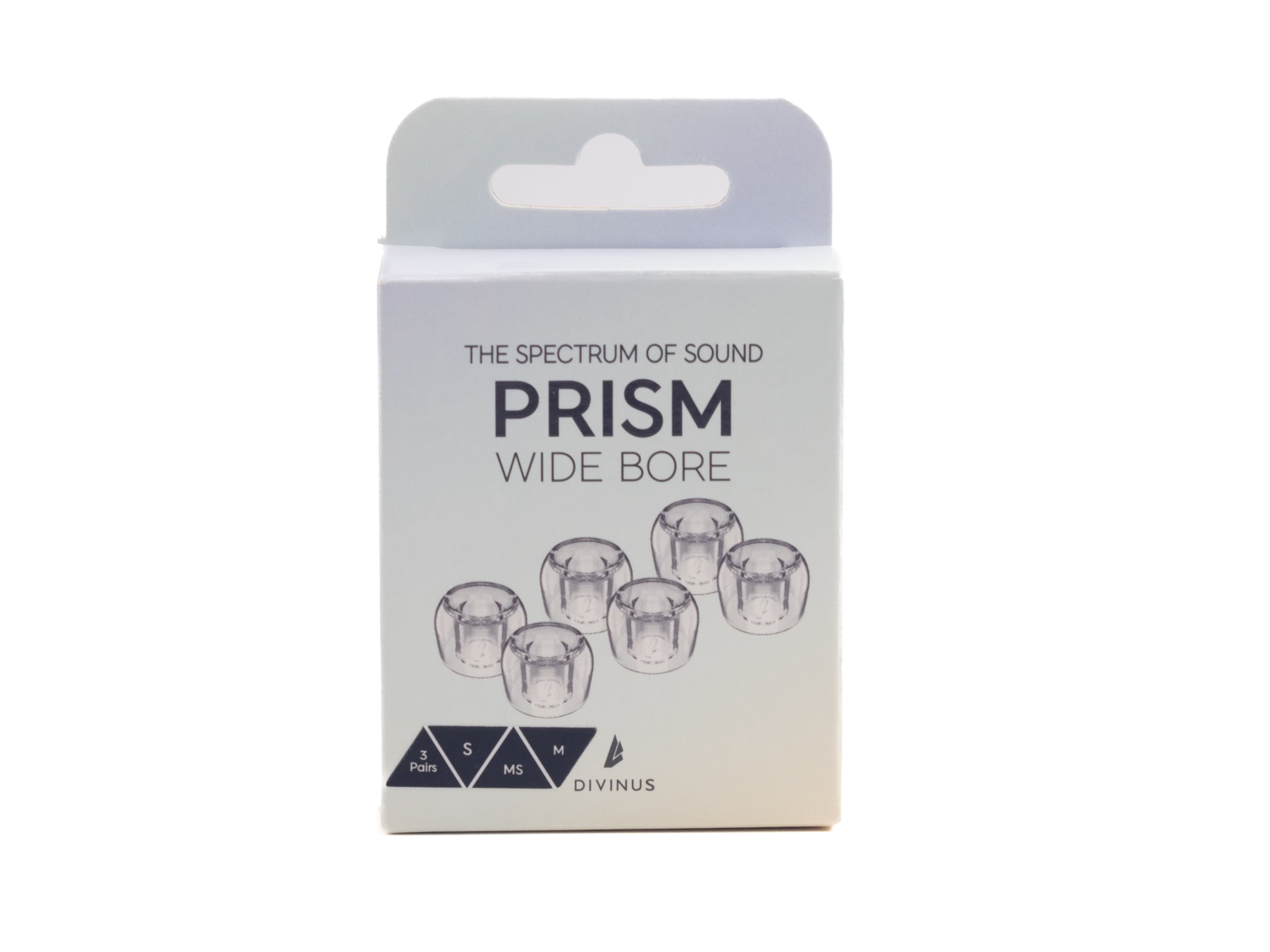
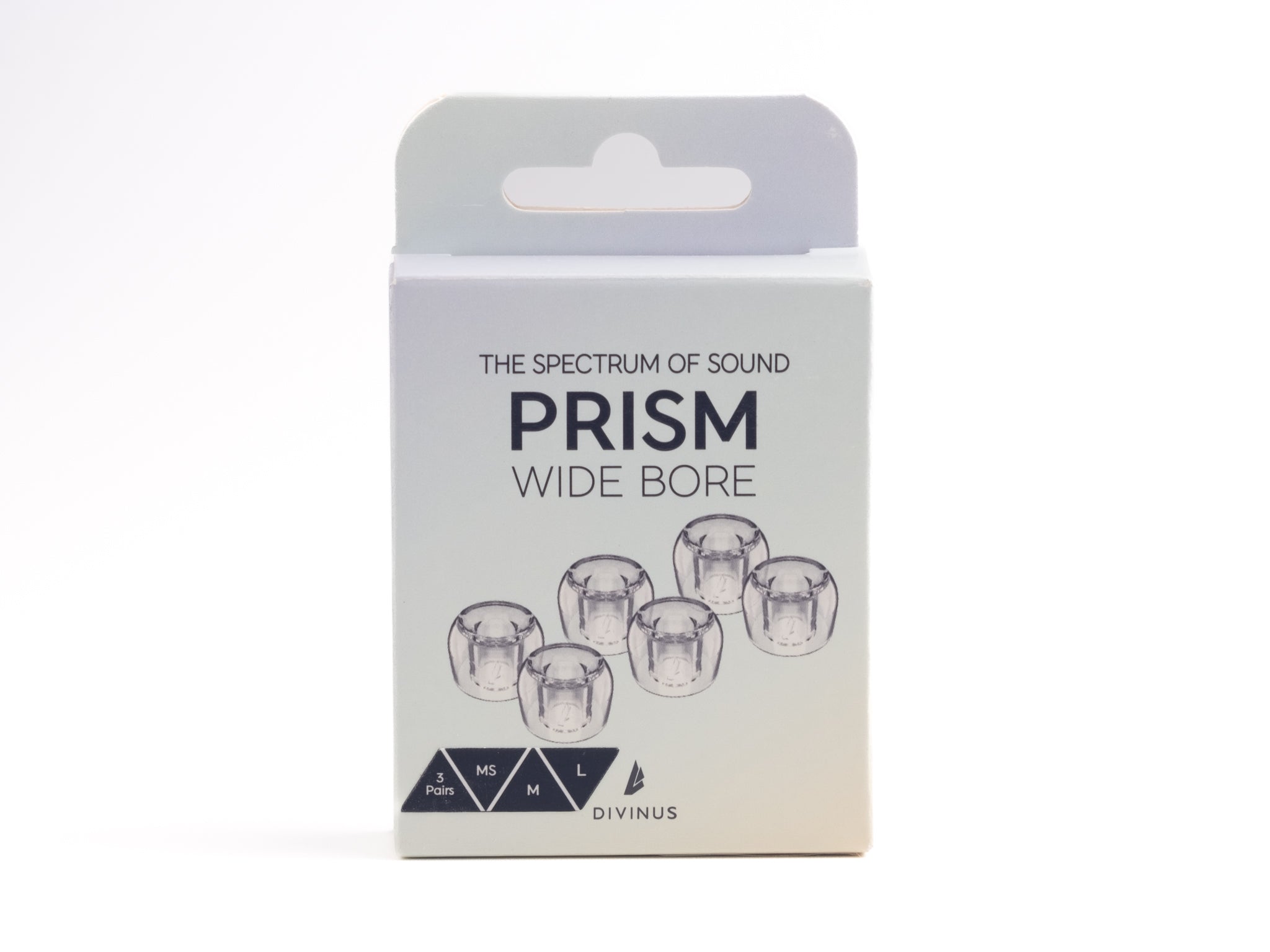
Divinus PRISM wide-bore ear tips