

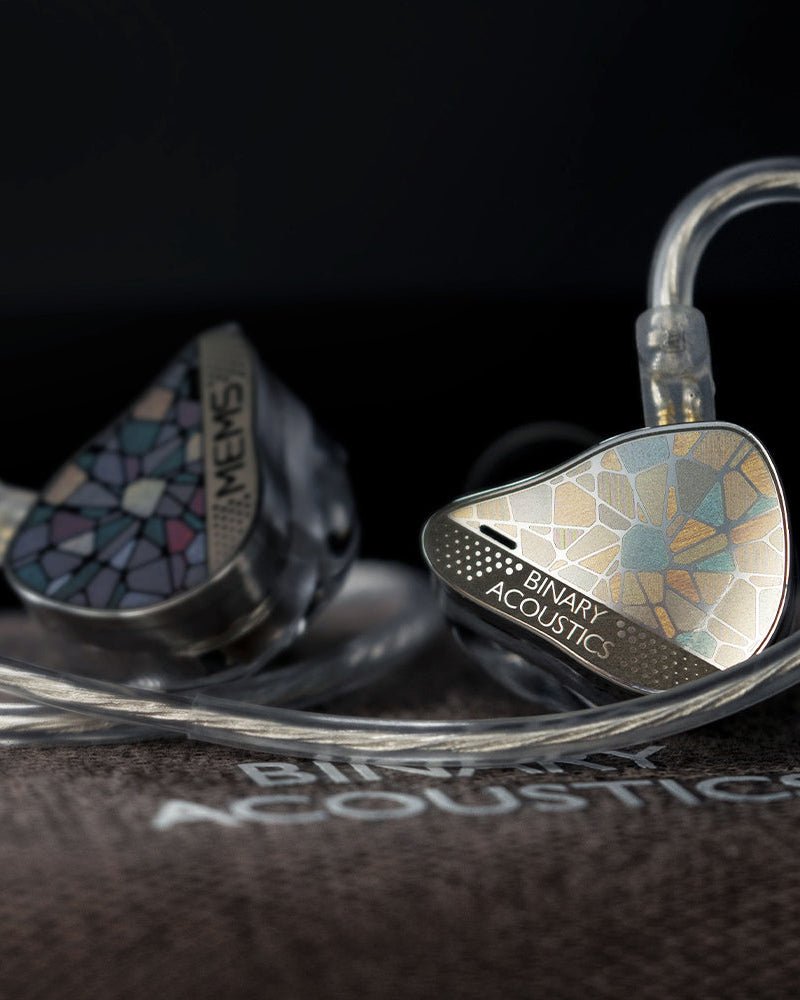
Binary Acoustics EP321 MEMS faceplates close up with the Binary Acoustics logo

What we hear

Natural Bass
Bass is there when the music asks for it, never more.
Cool Tone
A lighter, cleaner sound that puts clarity first.
Natural Vocals
Voices sit where the recording put them, clear and even.
Bright and airy Treble
The top end is bright and open, with lots of detail and air. If sharp S sounds tire you, a softer set will suit you better.
Wide Soundstage
Music spreads past your ears, with room between the instruments.
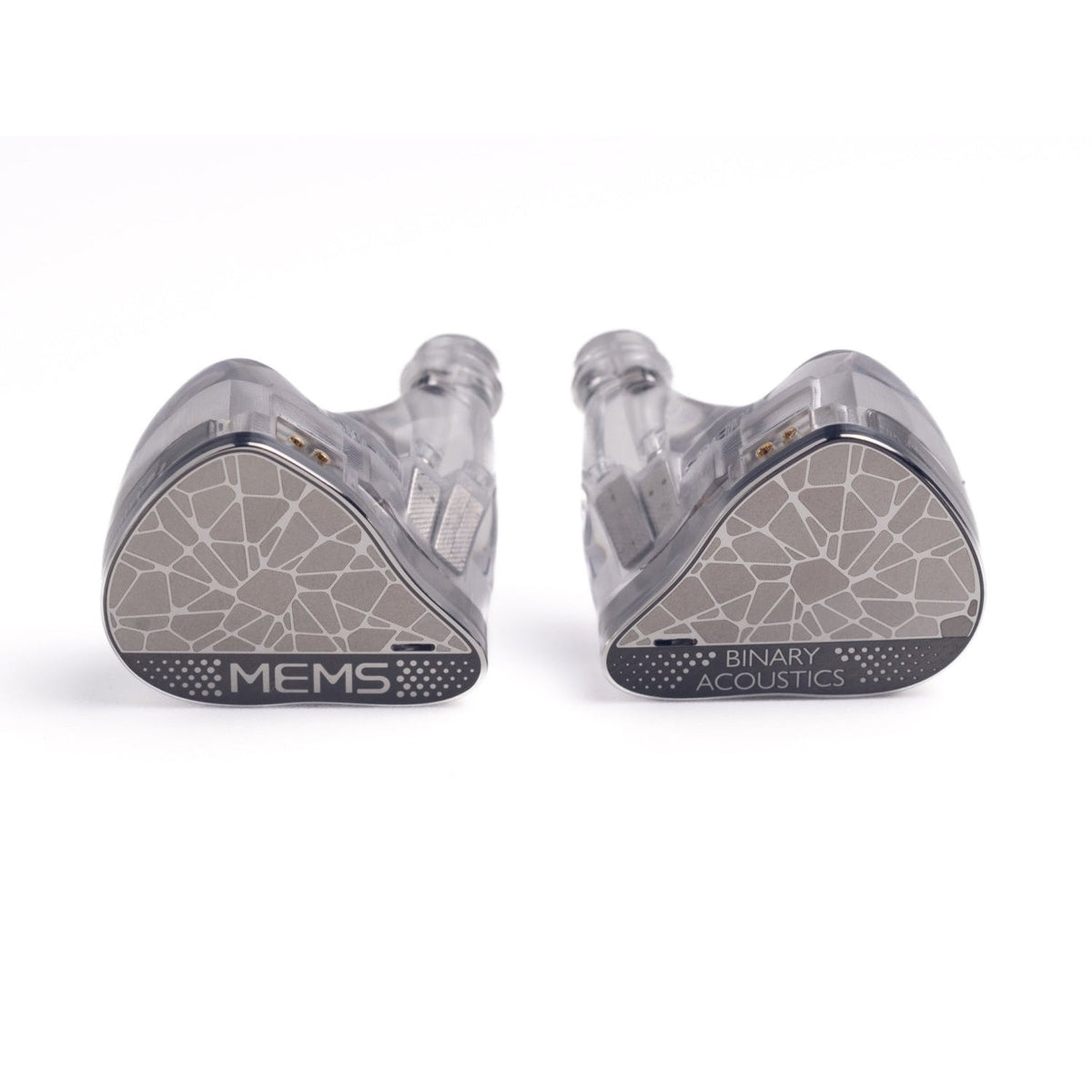
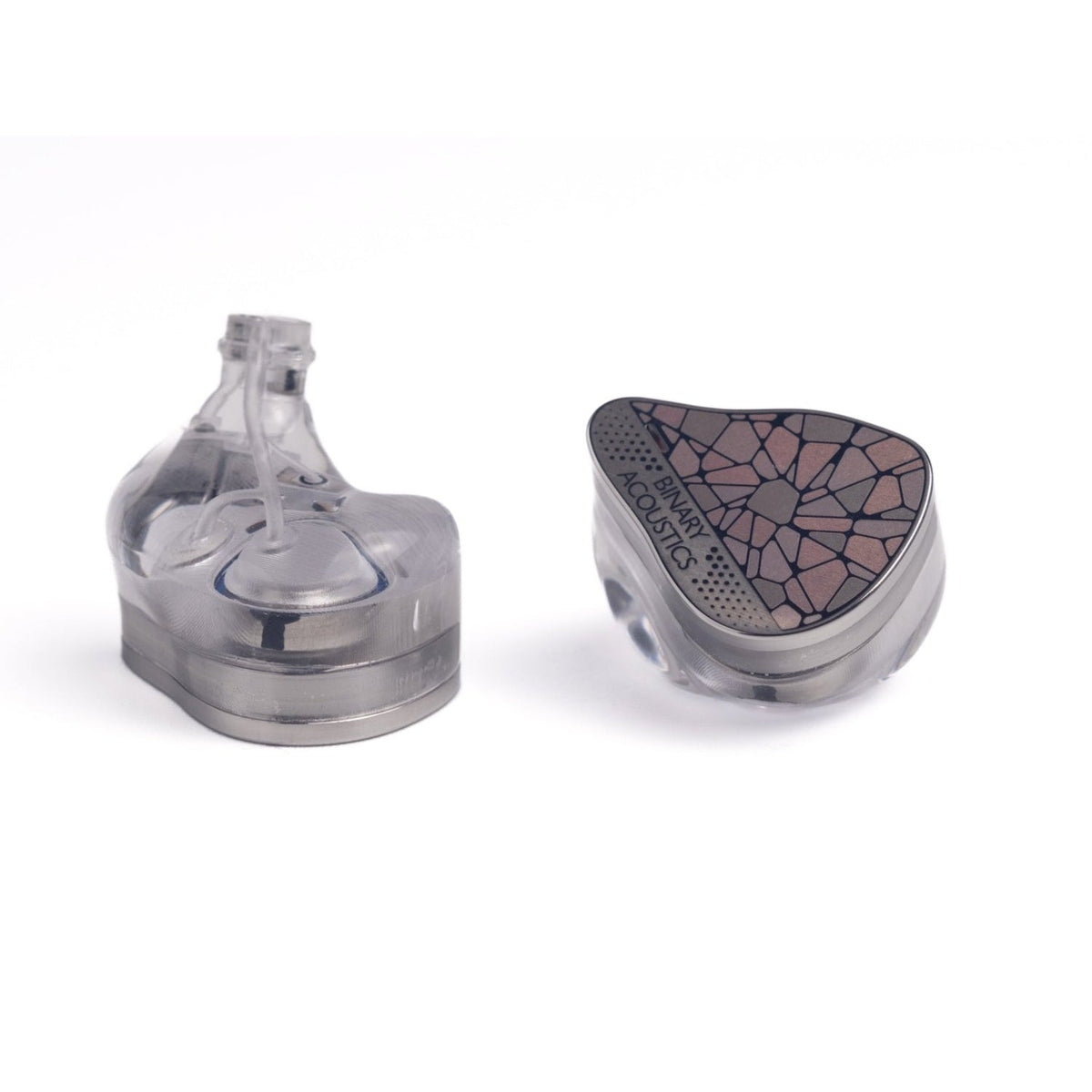
Binary Acoustics EP321 MEMS in-ear monitors, clear grey shells with mosaic faceplates and MEMS lettering

How it's built

Connectivity: 4.4 mm
Build:
Stabilised natural wood set in clear resin with red pigment; every faceplate is different. Detachable 0.78 mm 2-pin cable with a 4.4 mm plug.
Comfort:
Ergonomic shell with a pressure-balance vent; easy for full evenings.

The specs:
Drivers: 6 drivers: 10 mm dynamic + 6 mm passive radiator + 3BA + 1 Direct Drive MEMS
Impedance: 13 Ω @ 1 kHz
Sensitivity: 122 dB/Vrms @ 1 kHz

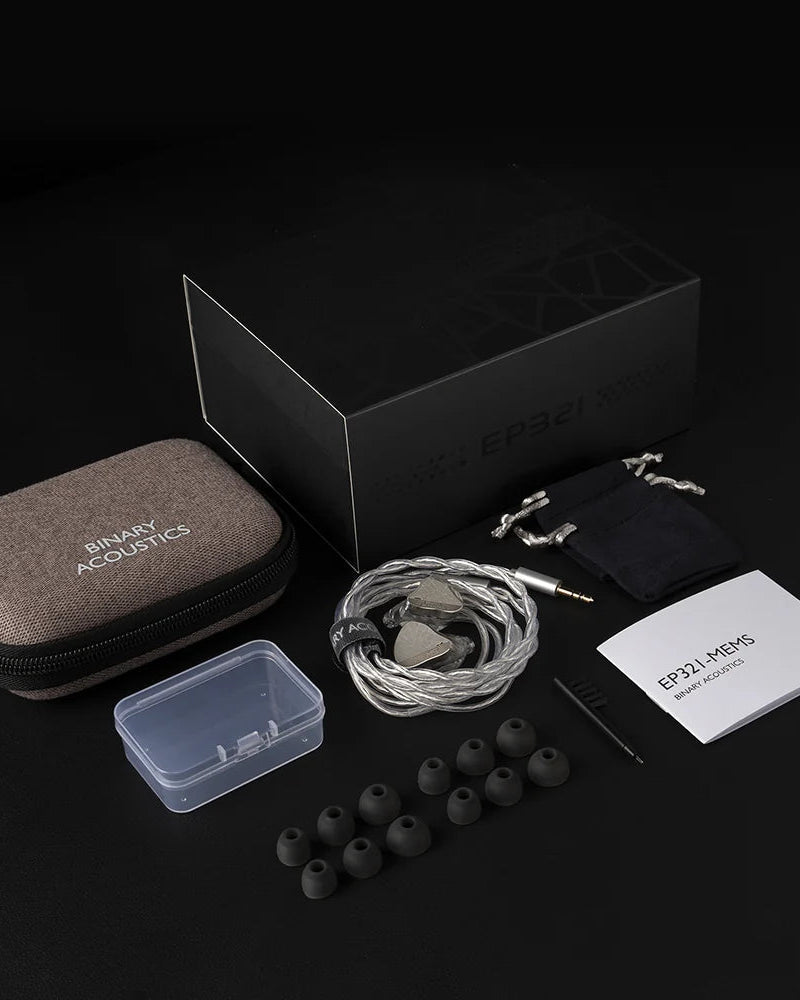
Binary Acoustics EP321 MEMS box contents: earphones, cable, case, tip box and ear tips

What's in the box

  • 1.2 m detachable cable, 4.4 mm termination
  • Silicone ear tips
  • Carrying case
  • Cleaning brush

What others ask  about Binary Acoustics EP321 MEMS

Is the bass on the Binary Acoustics EP321 MEMS sub-bass focused or mid-bass punchy?

Neither is boosted. The Binary Acoustics EP321 MEMS pairs a 10 mm dynamic driver with a passive radiator, and the bass it makes is tight and natural in level, not physical. Sub-bass (the rumble you feel) and mid-bass (the kick-drum thump) are both present and quick, but this is a lean set.

How do vocals sound on the Binary Acoustics EP321 MEMS?

Natural in position, lean in tone. Voices on the Binary Acoustics EP321 MEMS are clear and sit level with the band, with plenty of air around them from that open top end. What they don't have is warmth or thickness.

Is the treble on the Binary Acoustics EP321 MEMS smooth, sparkly or sharp?

Sparkly, openly so. The top end of the Binary Acoustics EP321 MEMS comes from a MEMS tweeter, a silicon chip that moves air directly with no coil and no film, and it is fast. The treble is bright, airy and extends further than anything else I stock near this price. If bright treble tires your ears, pick something else.

Is the Binary Acoustics EP321 MEMS fatiguing over long sessions?

For treble-sensitive ears, yes, and I'd rather say that here than have you find out at home. The Binary Acoustics EP321 MEMS is lean and energetic, not warm, and the brightness is always there. If you enjoy that kind of sound you'll be fine, because the ergonomic shell has a pressure-balance vent and it's easy to wear for full evenings.

Is the soundstage of the Binary Acoustics EP321 MEMS intimate or wide?

Wide and airy. All that treble extension gives the Binary Acoustics EP321 MEMS a lot of space between instruments, and the lean bass keeps the stage clear instead of filling it with warmth. It suits classical, acoustic and well-recorded electronic music.

Does the Binary Acoustics EP321 MEMS fit smaller ears?

The Binary Acoustics EP321 MEMS has an ergonomic shell with a pressure-balance vent, and it's easy to wear for full evenings. With a 10 mm dynamic driver, a passive radiator, three balanced armatures and the MEMS tweeter inside, I'd call it a medium shell and not a small one. For smaller ears, start with the smallest tips, or try it in Utrecht first.

Not sure which IEM is right for you? Find your sound using our 1-min quiz.

Find my sound